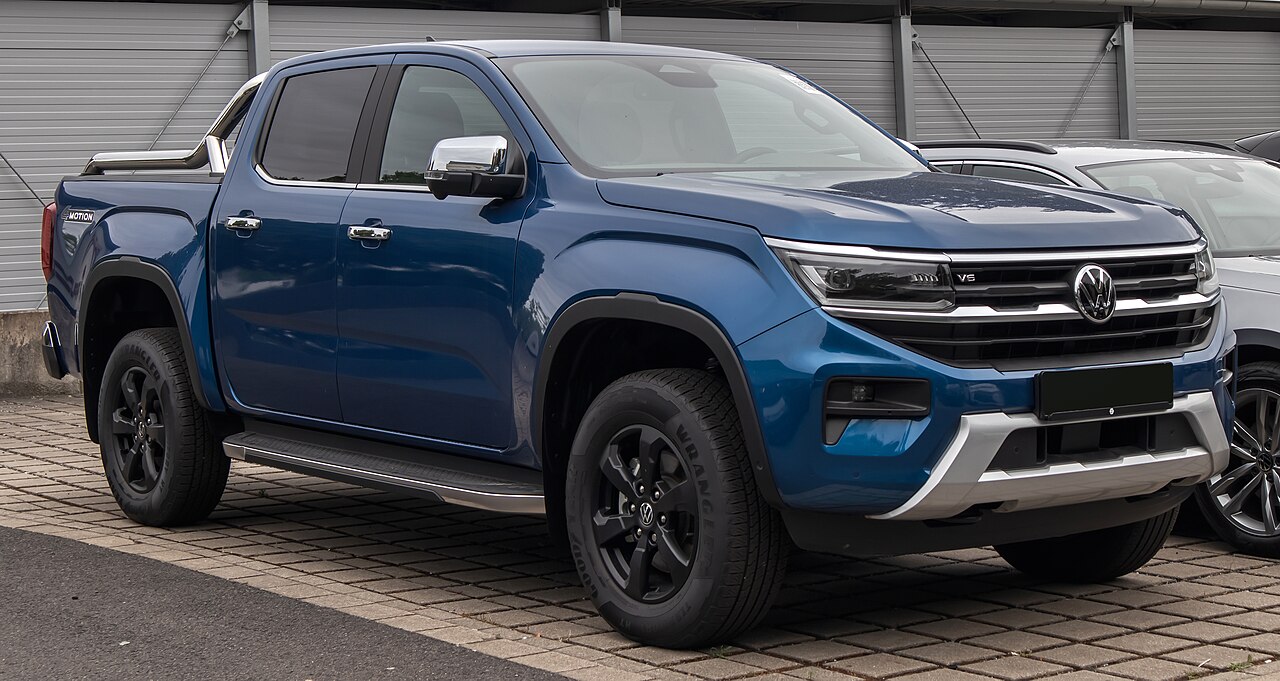
New VW Amarok: A Strategic Pivot Towards a Chinese Platform for Brazil in 2027
The Volkswagen Amarok, a formidable contender in the highly competitive medium pickup segment, is embarking on a transformative journey. Far from a mere refresh, the next-generation Amarok destined for the South American market, particularly Brazil, is set to redefine its identity with a surprising strategic pivot: it will leverage a robust Chinese platform for Brazil. This groundbreaking development signals a significant shift in Volkswagen's approach, promising a larger, more technologically advanced, and future-proof vehicle set to launch in 2027.
Production for this new Amarok is confirmed for Volkswagen's Pacheco plant in Argentina, following a substantial R$ 580 million investment. This commitment underscores the brand's dedication to the regional market, even as it embraces a globally sourced foundation for its next-generation pickup. The decision to adopt a Chinese base for Brazil marks a bold, independent path for Volkswagen, promising a vehicle tailored for local preferences while benefiting from global engineering efficiencies.
From Collaboration Hopes to Independent Innovation: The SAIC Maxus Interstellar X Era
Initially, industry whispers suggested a different trajectory for the new Amarok. The expectation was that Volkswagen would extend its global partnership with Ford, sharing the platform of the current-generation Ford Ranger for its South American Amarok, much like the arrangement seen in South Africa. This collaborative endeavor, known as Project Cyclone, aimed for joint production at Ford's Pacheco facility. However, these plans ultimately stalled due due to logistical and commercial divergences, leaving Volkswagen to chart a new course.
Rather than seeking another conventional partnership, Volkswagen opted for an independent and strategically sound solution: adapting a Chinese model. This led to the selection of the SAIC Maxus Interstellar X as the structural backbone for the next Amarok. Unveiled at the 2025 Shanghai Auto Show, the Maxus Interstellar X impressed with its modern architecture and versatile capabilities. Volkswagen's move to embrace this advanced Chinese platform for Brazil demonstrates a pragmatic approach, prioritizing agility, cost-effectiveness, and control over product development tailored for the South American consumer.
The Maxus platform is not just a structural base; it's a testament to modern automotive engineering, boasting high technical capacity and excellent structural evaluations. This foundation allows Volkswagen to develop a new Amarok that is robust, reliable, and adaptable to various market demands, making the concept of a base chinesa brasil not just a cost-saving measure, but a strategic advantage for future growth in the region.
Dimensions, Design, and Drivetrain: A Glimpse into the Future Amarok
One of the most immediate and impactful changes for the new Amarok will be its size. Drawing inspiration from the Maxus Interstellar X, the next Amarok is expected to be significantly larger than its predecessor. The Maxus measures an impressive 5.50 meters in length, 2 meters in width, and features a generous 3.30-meter wheelbase. These substantial gains translate directly into practical benefits for South American consumers: a more spacious cabin for occupants and a considerably larger, more capable cargo bed.
While the underlying platform is Chinese, the exterior and interior aesthetics will undoubtedly bear the distinctive Volkswagen imprint. The brand's design team in Brazil will be instrumental in adapting the visual identity of the Maxus Interstellar X to align with Volkswagen's familiar design language, ensuring the pickup resonates with existing Amarok loyalists and new buyers alike. Early test mules, already spotted camouflaged in both Argentina and Brazil alongside the current-generation Amarok, confirm that Volkswagen is diligently working to integrate its brand DNA into this new framework. For an in-depth look at how these design changes will redefine the vehicle, explore this article: Bigger & Smarter: Amarok's Chinese Base Redefines VW Pickup for Brazil.
Interior Modernization and Powertrain Versatility
Inside, the Maxus Interstellar X showcases a futuristic cockpit, typically featuring dual horizontal screens and minimal physical buttons. However, Volkswagen is anticipated to tailor this for the Brazilian market, likely adopting a cabin more aligned with VW's ergonomic principles and visual standards. The aim will be to create an intuitive and comfortable environment that blends cutting-edge technology with Volkswagen's renowned user-friendliness.
Perhaps the most forward-looking aspect of the new Amarok's Chinese platform for Brazil is its powertrain versatility. While initial offerings are expected to feature turbo gasoline engines, the SAIC Maxus platform is inherently designed to accommodate a range of propulsion systems, including hybrid and fully electric configurations. This multi-energy capability is crucial for future-proofing the Amarok, aligning it with global trends towards decarbonization and sustainable mobility. It represents a significant leap forward from the current model, which has largely maintained conventional engine options since its debut. This strategic choice is pivotal for Volkswagen's long-term vision in the South American market, allowing them to adapt to evolving environmental regulations and consumer demands for more eco-friendly options.
Production, Investment, and Market Impact: The Road to 2027
The journey to the 2027 launch is already well underway. The R$ 580 million investment in the Pacheco plant in Argentina solidifies its role as the production hub for the new Amarok for the region. This financial commitment is vital for upgrading facilities, tooling, and training, ensuring that the Argentinian plant can efficiently produce a vehicle built on this advanced Chinese foundation.
The transition will be gradual. Volkswagen has confirmed that the current-generation Amarok, which has served the market for over a decade, will continue to be produced in parallel with the new model at the Pacheco assembly line. This dual-production strategy allows for a smooth market transition, catering to existing demand for the proven model while slowly introducing the next-generation pickup. This approach minimizes disruption and gives Volkswagen ample time for final engineering adjustments, design refinements, and production ramp-up.
The introduction of a larger, more technologically advanced Amarok with a versatile powertrain strategy is poised to significantly impact the South American pickup market. This segment is fiercely competitive, with strong players vying for dominance. Volkswagen's bold move to use a Chinese platform for Brazil with its inherent scalability and modern features could give the Amarok a decisive edge. It positions the brand to offer a vehicle that is not only robust and capable but also forward-thinking in terms of technology and environmental sustainability. For a deeper dive into the reasons behind VW's platform choice, check out: VW Amarok 2027: Why a Chinese Maxus Base Replaced the Ford Partnership.
For consumers, this means more choices. Potential buyers will be able to opt for a pickup that offers more space, advanced safety features, and the potential for greater fuel efficiency through hybrid or even electric variants in the future. This move by Volkswagen signifies a renewed commitment to innovation and market leadership in a region where pickups are not just workhorses but integral parts of daily life and culture.
Conclusion
The new Volkswagen Amarok, with its 2027 Brazil launch powered by a Chinese platform for Brazil, represents a strategic masterpiece from Volkswagen. By choosing the SAIC Maxus Interstellar X as its foundation, the brand is not only ensuring a larger, more modern, and technologically advanced vehicle but also embracing a flexible architecture capable of adapting to future mobility trends, including electrification. This bold pivot, backed by significant investment in Argentina, underscores Volkswagen's long-term vision for the South American market.
The new Amarok promises to be more than just a new model; it's a statement of independence and innovation. It blends robust Chinese engineering with Volkswagen's signature design and quality, offering a compelling package for the discerning South American consumer. As the automotive world continues to evolve, Volkswagen's strategic adoption of this base chinesa brasil positions the Amarok to lead the charge into a new era of versatile and sustainable pickups.